As of October 16, 2026, our options-selling-powered dividend stock portfolio stood at $13,456, marking a weekly decline of 1.37% compared with the previous week.
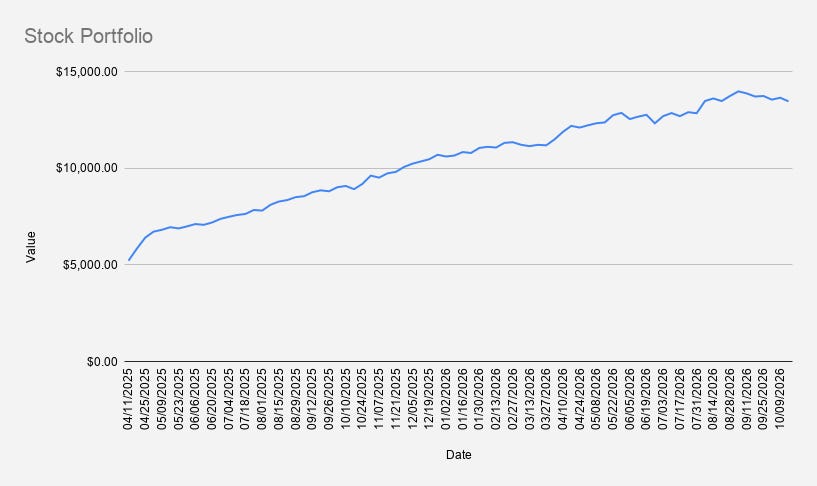
This actually came as a bit of a surprise to me, as the underlying stock prices in the portfolio seemed to be moving in the opposite direction. My best guess is that some option prices hadn’t fully settled or updated when I checked the numbers early on Saturday morning. I’ll need to double-check that.
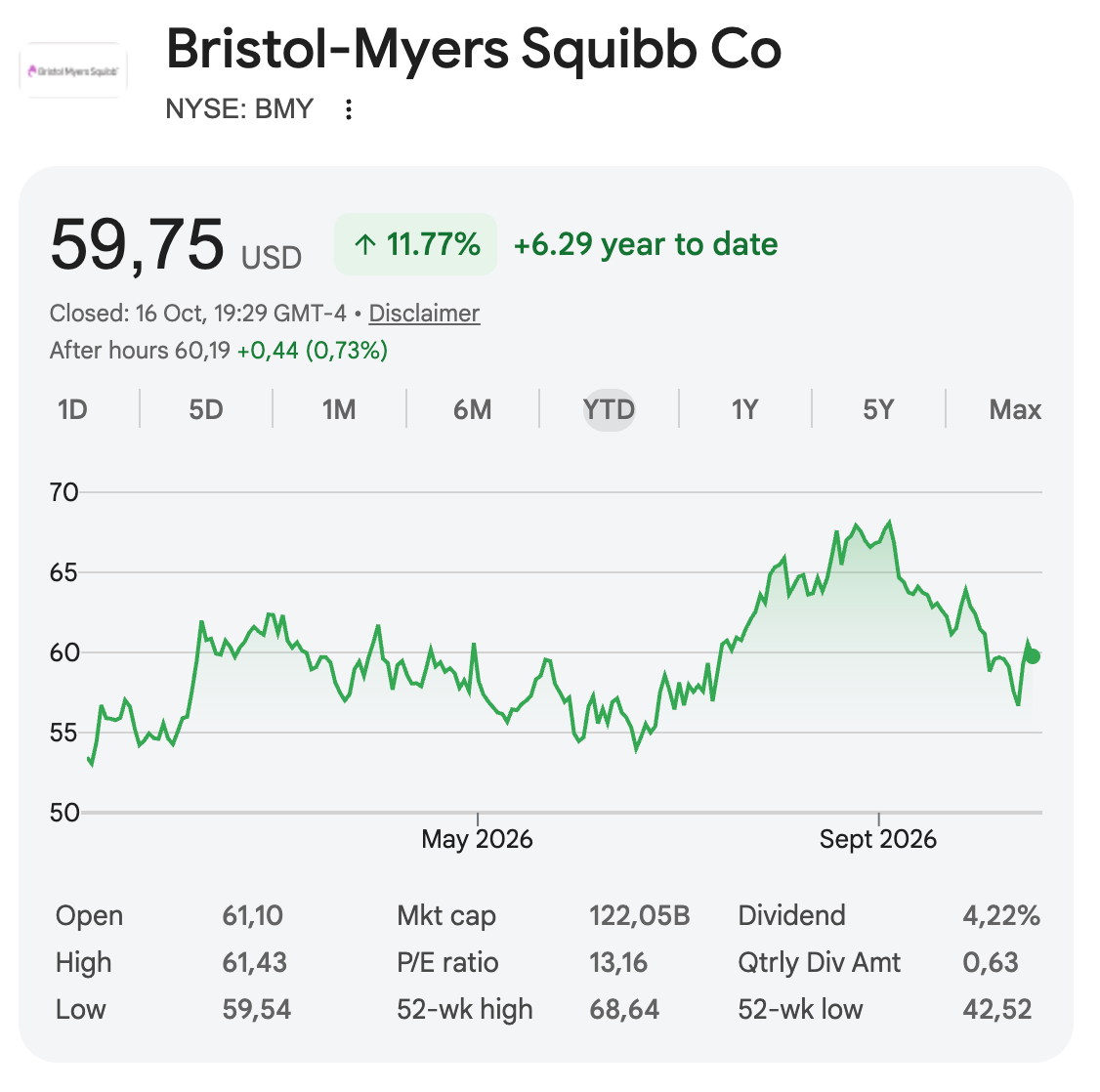
That said, it was another week of ups and downs. The previous week, I switched to selling covered calls on Bristol Myers Squibb (BMY). This week, I decided to let those shares get called away and return to selling puts, effectively continuing the wheel strategy.
Nothing particularly dramatic, just another week of collecting premiums, managing positions, and letting the wheel do its work.
Year to date, our portfolio is up 33.80%, comfortably outperforming the S&P 500’s 11.68% gain over the same period.
After our Bristol Myers Squibb (BMY) covered call expired in the money, I couldn’t find a meaningful opportunity to roll the position forward for another week or two while collecting a decent credit. So, I decided to reset the wheel, let the shares get called away, and re-enter through put selling, hopefully collecting higher premiums along the way. Let’s see if I regret that decision next week!
Additionally, our Bank of America (BAC) bear call spread expired worthless, allowing us to keep the full premium collected. I opened a new bear call spread, this time with a December expiration.
We use bear call spreads on top of our challenged short put positions to squeeze some extra premium out of trades that haven’t exactly gone our way. It’s a way to generate additional income while waiting for the underlying stock to recover.
Of course, this can be a dangerous game. We’re essentially adding another layer of risk to an already challenged position, and a sharp rebound in the stock could quickly turn those extra premiums into losses.
And if you’ve been following my articles hoping to learn a thing or two about options trading, remember: I’m sharing my own experiments, not a trading playbook. Follow along, but trade at your own risk.
Current Open Options Positions
BMY OCT 23, 2026: $60 Cash-Secured Put
BMY NOV 20, 2026: $5-wide Rolled Credit Spread, with strikes lowered by $2.50
NFLX NOV 20, 2026: $85/$105 Bear Call Spread
BAC DEC 18, 2026: $57.5/$60 Bear Call Spread
LHA (Frankfurt) DEC 18, 2026: €7 Cash-Secured Put
BAC MAR 19, 2027: $55 Short Put
NFLX DEC 17, 2027: $64 Short Put
NVDA JAN 21, 2028: $130 Covered Call
Our open positions now span several expiration dates, ranging from weekly covered calls to long-dated options extending into 2028.
Weekly Options Premium
Our reported options premium collected during Week 80 reached $78.94, slightly below the previous week’s $101.
As we let our 100 shares of Bristol Myers Squibb (BMY) get called away at $59, we also reduced our margin balance by $5,900. Our outstanding margin debt now stands at approximately $2,397, actually a slightly better position than before we entered the BMY buy-write trade two weeks ago.
In theory, if we directed the entire $78.94 in weekly options premiums toward paying down margin debt, it would take approximately 31 weeks, or just over seven months, to eliminate the remaining balance.
Of course, this assumes consistent weekly premium collections, no additional borrowing, and no interest expenses or trading losses. Real life is rarely that straightforward.
To complicate matters further, we continue reinvesting some of our proceeds into fractional shares rather than directing every available dollar toward margin repayment.
This week, we added:
0.1 share of BMY
0.1 share of BAC
2 shares of NIO
These small purchases are part of our gradual accumulation strategy. They won’t transform the portfolio overnight, but over time, they should help us build larger positions and potentially open new opportunities for covered call selling.
A New Long-Term Position: NIO
This week, I also introduced a new long-term position to the portfolio, and it’s a rather speculative one: NIO (NIO).
I have a bit of history with this stock. In the past, I’ve traded NIO options with mixed success, watching the share price climb from around $5 to $55 and then fall all the way back. Quite a roller coaster, and not always a profitable one.
This time, however, I’m taking a different approach. Instead of jumping straight into options selling, I’ve decided to start small and gradually accumulate shares through dollar-cost averaging. The initial idea is simple: buy around 2 NIO shares per week, regardless of short-term price movements, and see where this takes us.
At that pace, we could accumulate roughly 100 shares in a year, potentially enough to start selling covered calls if the stock price and option premiums make sense.
For now, though, the goal isn’t to squeeze every possible dollar out of NIO. It’s to build a small, speculative long-term position without committing too much capital upfront. Let’s see how this experiment plays out.
What We Are Watching Next Week
Next week should be interesting, especially after the recent selloff in technology stocks. The Nasdaq lost around 4.5% last week, and with earnings season picking up, I wouldn’t be surprised to see more volatility.
For our portfolio, however, the main focus will be BMY and our $60 cash-secured put expiring Friday, October 23.
Having just let our 100 BMY shares get called away at $59, we’re back to selling puts. If BMY stays above $60, we should be able to keep the premium and start another cycle. If it finishes below $60, we could be assigned another 100 shares, effectively restarting the covered call side of the wheel.
Either outcome is manageable, although another assignment would increase our margin borrowing again, something I’m not particularly excited about after reducing it to $2,397.
For Week 81, I’d be happy with another $50–$100 in premiums, provided we don’t take unnecessary risks to get there. The most interesting decision will likely come on Friday, when our BMY $60 put expires.
Will we keep the premium and sell another put, or get assigned and return to covered calls? Let’s see what next week brings!